
Football, Explained: What is the record for most goals scored in a single season?
Which player has scored the most goals in a single season?
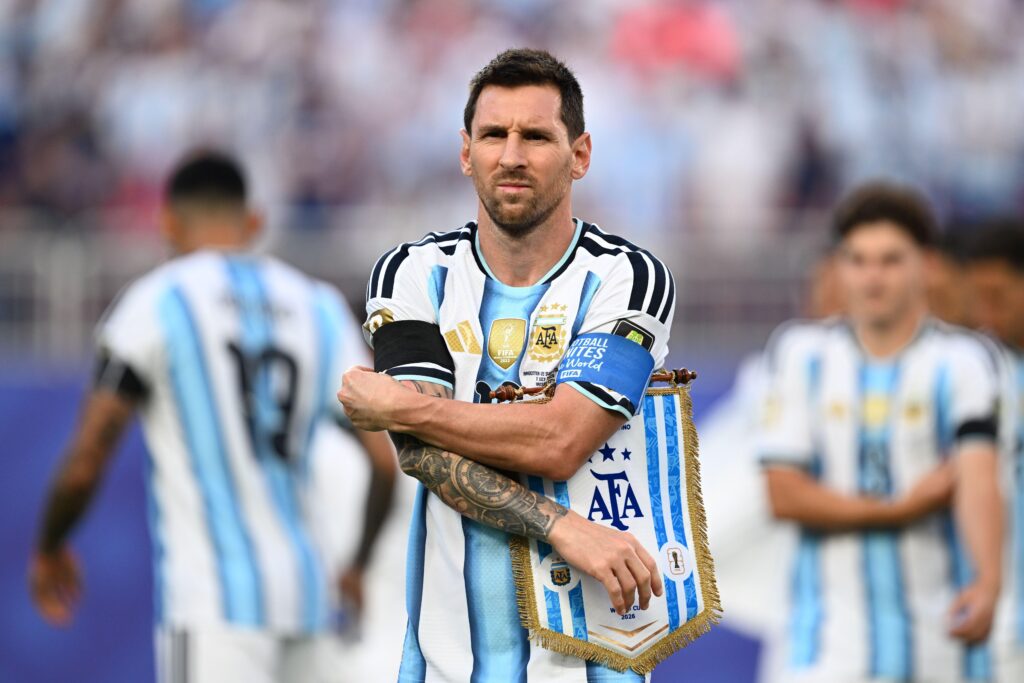
Ask a football fan for the highest goals tally ever produced in a season and most will say Lionel Messi.
That is the effect of 73 goals for Barcelona in 2011-12, 50 league goals in the same campaign and a calendar year that ended with 91 goals across appearances for club and country.
Messi and Cristiano Ronaldo spent more than a decade making numbers that once belonged to fantasy feel strangely normal.
But the world record is not Messi’s. It is not Ronaldo’s either. To find the highest recognised club tally in a single season, you have to leave modern football’s superstars behind and head back to Belfast in 1930-31, when Glentoran striker Fred Roberts scored an astonishing 96 goals.
That figure remains the recognised world record for club goals in a single season, while a 76-goal campaign, achieved by Johnica Collins in American Samoa in 2024, now stands as the highest league tally ever recorded.
The numbers are extraordinary. The names are far less familiar.

Fifty-five of Roberts’ strikes came in the Irish League, with another 41 spread across domestic cup competitions. That total remains the recognised world record for club goals in a single season.
Roberts is not a household name outside Northern Ireland, which perhaps explains why his achievement has slipped beneath football’s wider radar.
There was no global television audience, no Ballon d’Or debate and certainly no social media counting every finish in real time. His exploits survived instead through club history books and stories passed down through generations of fans.
The context matters, of course. Football in 1931 looked nothing like today’s game. Tactical systems were more open, pitches were heavier and domestic calendars were structured differently.
Glentoran also played numerous cup competitions, creating extra opportunities to score. Even so, averaging virtually a goal every game over an entire campaign remains a remarkable feat in any era.
If you narrow the question of who scored the most goals in one season to league football only, the answer changes, and surprisingly, it changes to somebody who achieved the feat only two years ago.
During the 2024 FFAS Senior League season in American Samoa, Pago Youth striker Johnica Collins scored 96 league goals. It is recognised as the highest league tally ever recorded in a single season.
Collins, who was just 18 at the time, produced stat lines that barely seemed believable, including one match in which he came off the bench and scored 10 goals during a 24-1 victory over Utulei Youth. What is perhaps most incredible of all is that Collins racked up his world-record goals tally in just 19 games.
Like Roberts’ achievement, Collins’ record comes with important context. American Samoa’s domestic league is a world away from Europe’s elite competitions, both in standard and scale. But records simply measure what happened on the pitch, and nobody has ever scored more league goals across a single season.
That distinction highlights why football records can be surprisingly complicated. Ask for the most goals in a season and the answer depends on precisely what you mean.
If you mean in Europe’s top leagues, Messi’s 73 remains the benchmark. If you mean in a calendar year, Messi’s 91 from 2012 still stands alone.
But if you mean the most club goals in one competitive season anywhere in the world, that honour belongs to Fred Roberts and his scarcely believable 96 for Glentoran in 1930-31.
And when it comes to league goals, the crown passes to Johnica Collins, whose own total of 96 in 2024 quietly rewrote football’s statistical history.
Perhaps the most remarkable thing is not that these records exist. It is how easily some of them disappear from public memory. Messi and Ronaldo ensured an entire generation became obsessed with goal tallies, yet the man who still owns the biggest seasonal total played long before television cameras arrived, while the player who set the league record did so thousands of miles from football’s traditional centres of power.
Sometimes the biggest numbers are hiding in the smallest corners of the game.