
The Academy Beat: 2026 World Cup Has Shown Success of EPPP But ‘Fall-Out’ Rate Remains Brutal
The path to football's elite level is long and difficult. Few make it to the top, and even fewer stay there. Discover just how brutal the 'fall-out' rate is.

This summer’s World Cup has sharply brought into focus the success of Academy football in England. Of Thomas Tuchel’s squad, 84% entered the Academy system before the age of nine. The majority at the Category 1 level.
There is no denying that the Elite Players’ Performance Plan (EPPP) implemented for the beginning of the 2012/13 season had the desired effect.
The overhaul of youth development has seen the country produce more technically gifted footballers.
The international set-up has benefited enormously with England winning the World Cup at the Under-20 and Under-17 level. European Championship success has twice been achieved by the Under-19s, once by the Under-17s, and the Under-21’s under Lee Carsley won the competition in 2023.
Thirty-one of those winning squads have now been capped by England at the senior level. A significant return on investment.
Of course, a young footballer’s development does not always run smoothly. England’s elite are no different. Some had diverging paths and encountered adversity before finally ‘making it.’
Marc Guehi, Tino Livramento and Declan Rice were all released by Chelsea as schoolboys. Eberechi Eze was rejected by Arsenal before rebuilding his career at Queens Park Rangers and then Crystal Palace. Arsenal had to pay £60 million upfront in August 2025 to re-sign him.
Harry Kane trained at Arsenal before moving across North London to their arch-rivals, Tottenham.

Manchester City had to pay Burnley £27 million to bring goalkeeper James Trafford back to the Etihad Stadium after he originally joined them as a 12-year-old from Carlisle United.
Locally born, Nico O’Reilly, was scouted at just six by Manchester City and was invited to join their prestigious Academy as an Under-9.
Defender Dan Burn was released by Newcastle at 11 and had to resurrect his career in the lower echelons of the football pyramid. Burn’s career path has taken him to Darlington, Fulham, Yeovil, Wigan Athletic and Brighton before eventually playing for his hometown club.
Newcastle United sold graduate Eliott Anderson to Nottingham Forest for £35 million and probably wish they had not. In a desperate bid to meet Profit and Sustainability rules, the club failed to insert any future sell-on clause either! It will prove a costly oversight.
The two Jordans, Pickford and Henderson, progressed through the ranks at Sunderland before famous moves to Merseyside. Local lads, Marcus Rashford and Kobie Mainoo, defied the odds to break into Manchester United’s first team.
Chelsea captain Reece James joined Chelsea at six. Bukayo Saka began training at Arsenal’s Hale End Academy at seven after being spotted by renowned scout Miguel Rios.
EFL is also a springboard into elite football
The Elite Players’ Performance Plan has also proven to work outside Premier League clubs, with members of England’s World Cup squad coming through at EFL clubs.
Most famously, Jude Bellingham joined Birmingham City as an Under-8 before his meteoric rise took him to Dortmund and then Real Madrid. Aston Villa defender, Ezri Konsa, played for the famous East London side, Senrab FC, before joining the Charlton Athletic Academy at eleven.
Ollie Watkins came through Exeter City’s Category 3 Academy. Likewise, Ivan Toney with Northampton Town. Morgan Rogers started his journey at West Bromwich Albion and Noni Madueke was with Crystal Palace and Tottenham as a promising youngster before moving to the Netherlands to join PSV Eindhoven as a 16-year-old.
Each player has a different pathway, but there is no denying the sacrifices, commitment and dedication needed to become a professional footballer, especially at the top level.

Numbers do not lie
The statistics do not mislead. Only 0.5% of young players graduate from an Academy to the professional ranks.
A study conducted by the University of Essex, later published in the International Journal of Sports Science and Coaching, demonstrated that 4% of teenagers in an Academy are eventually offered professional contracts.
Most telling of all is that only 2% of Academy players remain in the top five tiers of English football by the time they turn eighteen. Therefore, alarmingly, 98% of those offered Academy scholarships aged sixteen are not offered professional deals.
Football remains a brutal industry, and that is why agents swarm around talented youngsters in the hope of one of them being signed professionally.
Promising young Academy players are often offered boots, financial support, transport, accommodation, and a touch of glamour just on the off chance that they make it big.
The harsh reality is that they probably won’t.
In fact, only 3% of Category 1 Academy players in their twenties go on to play a single minute in the Premier League.
When they are released from the top level, around 6% drop into the EFL and 7% venture abroad in the hope of resurrecting their careers. A substantial proportion exits the game entirely. That creates its own issues with mental health, psychological shock, and depression.
Most young footballers had dedicated their lives to football and had become accustomed to the routine of training, travelling, and playing matches. It is hardly surprising that they suffer an identity crisis and become disillusioned with the sport.
Many are completely lost to the game.
Success is rare at the top level
The Professional Footballers Association (PFA), the Premier League’s Aftercare Programme, and the clubs do all they can to re-place them or find them alternative corporate jobs outside of football. Others seek re-education or explore entrepreneurship.
To make it as a professional footballer at whatever level remains extremely difficult. Even signing that first professional contract is no guarantee that you are destined for ten + years in the game.
Advancing from Under-21s football to competitive football requires a period of adaptability. There is greater pressure to win matches. Training is more physically demanding, and a certain mentality is needed to try to oust a senior professional from his position.
The game is faster. More tactical knowledge is essential, and physicality becomes a major factor.
Imposter syndrome can apply when you walk into that first-team dressing room for the first time. It is a case of sink or swim, and if you are reserved and introverted, then it becomes increasingly challenging.
Managers need results to save their own jobs, so relying on a promising youngster can be risky. A youngster’s form can be very hit and miss, as their bodies adjust to playing at a higher intensity twice a week.
Opportunities are usually scarce, and you have to grasp them. It is all about proving yourself all over again.
Therefore, only 50% of players who sign that first professional contract progress beyond the age of twenty-one. There is a substantial second cull.
According to the PFA, of the Academy scholars entering the scheme at 16, over 75% are entirely out of the professional game by the time they reach twenty-one.
It is no coincidence that clubs use the brief time frame to assess if a young player can make the adjustment to senior football. Professional contracts usually last between 1-3 years, and usually around 700 players are released by Premier League and EFL clubs each summer. The vast majority of these are young players under the age of twenty-two.
Some may be fortunate enough to sign for another professional club. This amounts to around 16.5% of those released. Dropping into non-league or playing semi-professional football whilst seeking permanent employment becomes a credible option.
Others fade into obscurity and never find their way back. Others choose not to. Rejected players can lose ‘their love for the game’ extremely quickly. An alarming figure of 90% suffer from depression or anxiety.
By the age of twenty-four, a player is no longer regarded as ‘a prospect’ and must have proven they can adjust to the demands of men’s football. Only 2% of those who came through the EPPP programme remain in the game beyond 24 and then only 10% go on to make 20+ appearances.
The descent out of the game happens quickly, and those scrapping around for a contract often decide to find more reliable employment, especially if they have a young family to support. Instead of chasing dreams, stability becomes key.
Only 0.012% of all those budding young footballers, dreaming of emulating the likes of Rice, Bellingham, and Kane, ever achieve the high of signing professionally with a Premier League club. Only one in 200 ever plays a minute in the top tier.
The industry remains as brutal as ever with to rejection. The psychological distress can be immense.
From having the world at their feet and the possible financial rewards that come with it, they regard themselves as failures and believe they have wasted their youth.
All that personal sacrifice for nothing.
The agents disappear. The offers dry up. They lurk around in limbo, desperately seeking another break somewhere. If they are fortunate, they may get another chance.
England’s World Cup squad shows that there are exceptions, but the odds are clearly stacked against the majority.
A hero from Liverpool
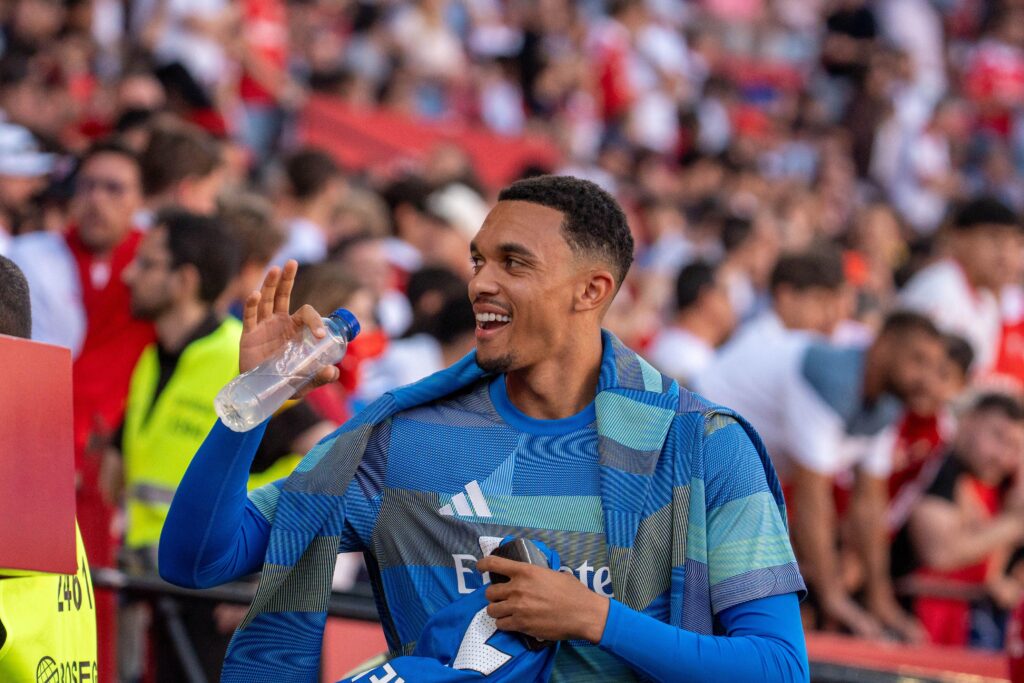
One player who did not make Tuchel’s squad was Trent Alexander-Arnold. The 27-year-old came through the Academy at Liverpool before joining Real Madrid last summer.
He understands what it takes to come through an elite Academy. He also appreciates what happened to most of his former team-mates from those youth teams.
During his two years as a scholar, only goalkeeper Caoimhin Kelleher followed Alexander-Arnold into the Liverpool first-team.
Notably, highly rated midfielder Herbie Kane dropped into the EFL with Barnsley and Huddersfield. Welsh winger Ben Woodburn is now at Salford City in League Two and central defender Conor Materson was released this summer by Gillingham.
The rest of the squad have either dropped into non-league or obtained game time in Scotland and Wales or by venturing abroad to countries such as the Netherlands, Australia’s A-League, or Belgium.
Alexander-Arnold is acutely aware of the fallout from professional football and founded his After The Academy initiative in 2023. He personally funds the project to help those footballers released by clubs to enter the workforce or offer career advice.
He has established a private career and educational portal only accessible to former Academy players. In collaboration with the PFA Business School, Alexander-Arnold has used his status to attract huge brands such as Adidas, Hugo Boss, Red Bull, Under Armour and Google to invest and offer direct career pathways.
At launch, Alexander-Arnold told the BBC that he had witnessed ‘lives being shattered in front of me.’
“I’ve seen first-hand the struggles and difficulties players have when they’re released from football clubs, and it’s gone on too long, and now it’s time for change.”
Alexander-Arnold’s honourable scheme at least provides somewhere for released youngsters to turn to. Many have never had to construct a CV or prepare for a formal interview before.
The ultimate dream is to become the next Trent Alexander-Arnold, and play consistently for Liverpool, Real Madrid, and England – but to be one of that 0.012% who believe they will requires an array of ingredients that many simply do not possess.
Dreams can be shattered into a million pieces, and there are not many around prepared to pick up the mess.