
The Academy Beat: How Premier League’s New SCR Rules Would Have Seen £116m Midfielder Elliot Anderson Remain At Newcastle
Newcastle were forced to sell Elliot Anderson in order to comply with the Premier League's financial regulations. The new SCR rules would have seen him stay on Tyneside.
In their quest to wrestle the Premier League title from Arsenal, Manchester City acted promptly in the summer transfer window. A successful decade of Pep Guardiola may have ended, but the big-money signings continue to arrive at the Etihad Stadium.
Guardiola departed by leaving the parting gifts of Marc Guehi and Antonio Semenyo in the January transfer window. The club then moved ahead of potential rivals to secure Elliot Anderson this summer, the price set at a club-record £116 million.
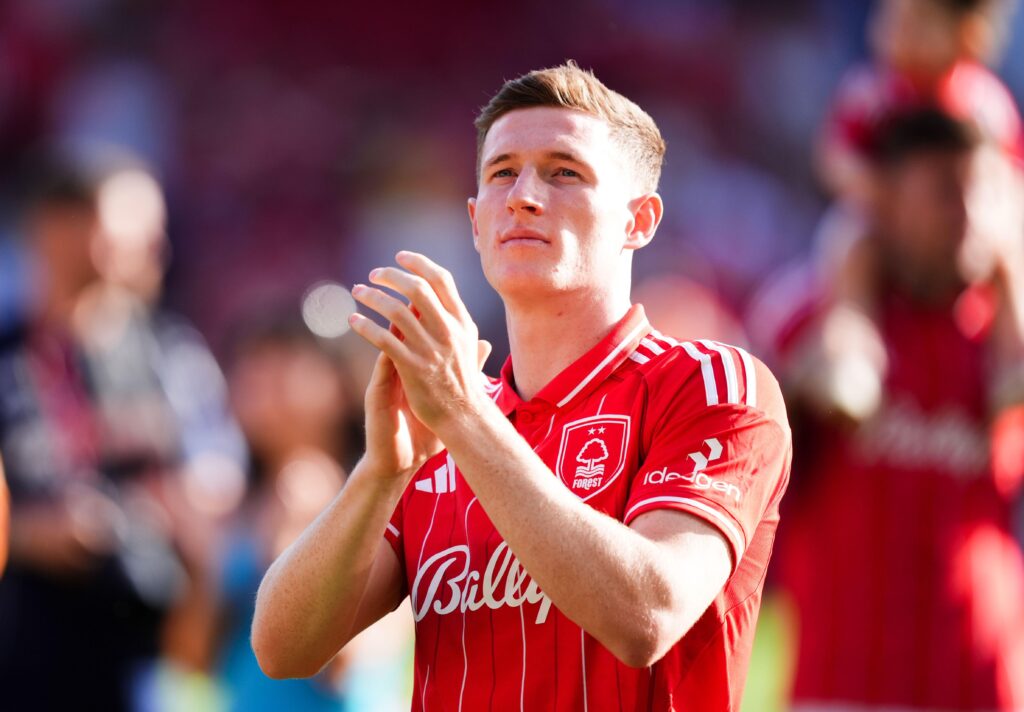
Anderson has impressed over the past 18 months. His performances became more consistent with Nottingham Forest, and he more than deserved his first England call-up back in August 2025.
Even so, you would have been a clairvoyant to predict Anderson starting alongside Declan Rice and Jude Bellingham at the World Cup just 10 months later.
Anderson justifiably caught the eye at the 2025 European Under-21 Championships in Slovakia. He was an influential figure for Lee Carsley’s Young Lions, playing every game as they went on to retain the trophy with victory over Germany.
Thomas Tuchel elected to fast-track him and has been impressed with his temperament, ability and maturity ever since.
He deservedly forced his way into the Germans’ plans, and his performances this summer reflected what a complete midfielder he has become.
Anderson was second only to the tenacious Paraguayan midfielder, Juan José Cáceres, for individual duels won and he covered the most ground, made the most successful passes and won the most tackles for an England side that reached the semi-final before coming up against Lionel Messi’s genius.
Does that justify a price tag of £116 million? Only time will tell on that one.
Pressure on the price tag
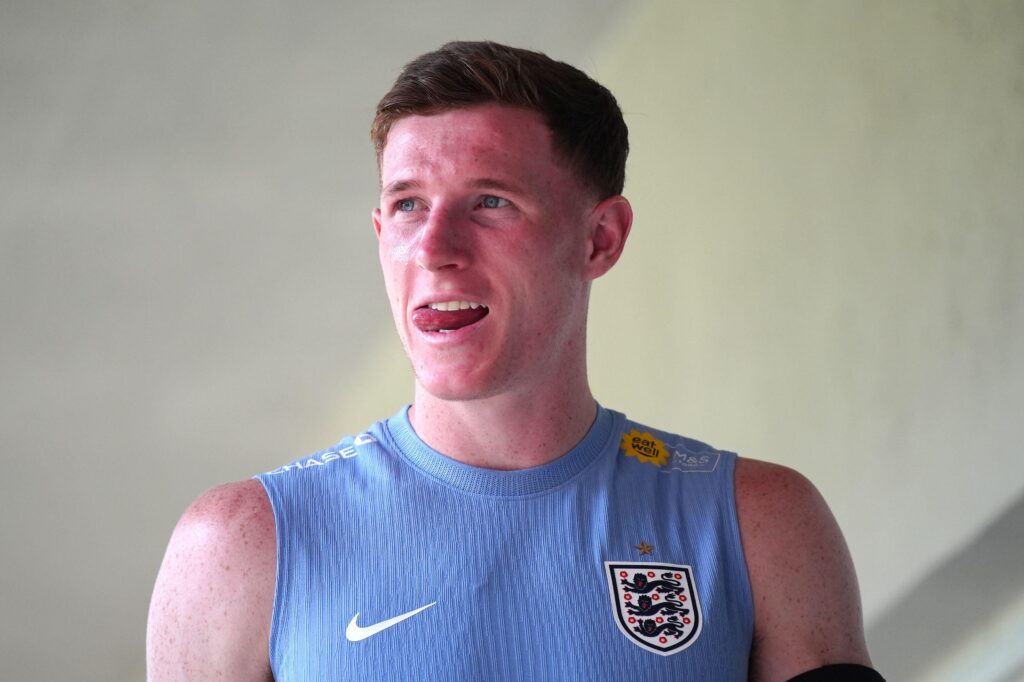
It is certainly a hefty amount to spend on a player with barely over 100 Premier League appearances under his belt.
But with transfer fees reaching ridiculous levels in 2026, especially in England, it is probably the going rate for a 23-year-old international starter.
Anderson cannot control the transfer fee, but it comes with added pressure, especially if he doesn’t hit the ground running.
City will be hoping that he becomes their new Rodri rather than another Kalvin Phillips.
The club will regard Anderson as the long-term replacement for their Ballon d’Or winner, once he elects to return to Spain.
City certainly won’t want another Phillips on their hands.
He arrived in Manchester a year after a successful European Championship, delayed by the COVID-19 pandemic.
He excelled alongside Rice as England lost the final to Italy on penalties. As a Leeds United icon, no-one balked at the £42 million price tag. But Phillips flopped dramatically.
In December 2022, Guardiola publicly questioned his weight and conditioning. An accusation that should really have remained in-house.
Although Guardiola apologised a year later, Phillips never really recovered, and his City career fell apart.
He started just two Premier League games for the club and has been loaned out to Ipswich, Sheffield United and West Ham United. Regardless of where he has been, his form has sadly deserted him.
Phillips became the forgotten man, but his six-year deal doesn’t run out until June 2028. Offloading him will be problematic when he is on a reported £7.8 million a year, equating to £150,000-a-week minus potential bonuses.
He took his earnings to another level, but in the meantime, his career at the elite level nosedived. Such a rapid decline is not expected to happen to Anderson.
Anderson’s path through adversity
Born and raised in Whitby Bay, Anderson comes from a fanatical Newcastle United-supporting family. Like many young Geordies, he dreamt of wearing the Black and White of his beloved club and emulating legends such as Bobby Moncur, Paul Gascoigne, Alan Shearer and Kevin Keegan.
His grandfather, Geoff Allen, even played for the club and contributed in the earlier rounds of their 1969 Inter-Cities Fairs Cup triumph. The severe knee injury that kept him out of the two-legged final subsequently ended his promising career at just 23.
Now at the same age, his talented grandson was excelling for England at a World Cup.
Anderson achieved his boyhood dream. He played junior football for the renowned Wallsend Boys Club (a grounding that helped Shearer, Peter Beardsley and Michael Carrick become elite footballers).
He joined the Newcastle United academy at eight and went on to captain various age groups. Anderson was a high-flier, playing for the Youth Team aged just fifteen and was called into the Under-23s as a sixteen-year-old.
It was no surprise that he signed his first professional contract on his seventeenth birthday.
What was rather surprising is that he was overlooked by England for their earlier age groups.
Through his Glasgow-born grandmother (not the wife of Allen), Anderson qualified to play for Scotland and did so, for the Under-16s through to the Under-21s.
At 20, he was even called up by Steve Clarke for the senior squad for a European Championship qualifier against Cyprus, but after attending the training camp, he later withdrew through ‘injury’.
It was later confirmed that he needed more time to commit his international future.
At the time, the then England manager, Gareth Southgate, stated: “We’re conscious that he’s a player who has progressed well. We like him. We think he’s a player with a lot of potential. I don’t know the full details of why he has withdrawn from the Scotland squad, but he is a player we have a lot of time for.”
Southgate managed to persuade Anderson to switch allegiance. Anderson put the ultimate decision down to a ‘gut feeling’ and immediately targeted representing the country at the 2026 World Cup. Another ambition ticked off.
Two years before his international future was resolved, Anderson made his Newcastle debut against Arsenal in the FA Cup as an eighteen-year-old. Nine days later, Steve Bruce introduced him late on against the same opposition for his Premier League debut.
With Eddie Howe replacing Bruce, the young midfielder was loaned out to Bristol Rovers in January 2022. The Newcastle connection was key.
Former Magpie midfielder Joey Barton was their manager, and his former team-mate, Shola Ameobi, as Newcastle’s loan manager, facilitated the move.
Anderson was a revelation at the Memorial Stadium.
Return to Newcastle and sale to Nottingham Forest

He earned the nicknames ‘Geordie Maradona’ and ‘Billy Elliot’ due to his ability to dance around League Two opponents. Anderson helped the club win promotion, contributing seven goals and six assists in just twenty-one appearances.
Howe rejected approaches from Championship and League One clubs to take him on loan the following season. He managed to force himself into the first-team squad, making 27 appearances, playing in the UEFA Champions League and he was introduced as a late substitute in the League Cup Final defeat to Manchester United.
At that stage, Anderson appeared to be a Newcastle star of the future. Injury flipped that perception upside down.
A stress fracture of the lower back kept him out for four months, and when he returned to full fitness, the club were under pressure to sell in order to meet the Premier League’s strict Profit and Sustainability Rules (PSR).
The homegrown Anderson became the sacrificial lamb.
Under the PSR framework, Premier League clubs were permitted to stand losses of £105 million over a rolling three-year period. Having spent large sums on players such as Sandro Tonali, Harvey Barnes, and Tino Livramento, they were exceeding that figure.
The club had until the end of June 2024 to find a shortfall of £50 million or face severe sanctions, such as a six-point deduction to start the following season.
Anderson was regarded as a key player for the future, but as an academy graduate, any transfer was regarded as straight profit on the balance sheet.
They reluctantly sold him to Nottingham Forest for £35 million.
Yankuba Minteh’s switch to Brighton and Hove Albion for £30 million covered the deficit.
In desperation to retain their more established stars and avoid a points deduction, the club elected to sell younger players.
Anderson had two years of his contract left to run. Yankuba Minteh had a full four years on his, enabling him to considerably bolster his wages with Brighton.
To meet the end-of-June deadline, Newcastle’s Chief Executive, Darren Eales, was operating from a depleted negotiation standpoint.
The Anderson deal to the City Ground did not include a potential buy-back clause nor a sell-on fee. With Manchester City prepared to pay in excess of £100 million for him this summer, it proved a costly error.
In fairness to Eales, every transfer carries an element of risk and hindsight is a beautiful thing.
Howe and the club did not want to sell one of their most promising youngsters, but were left with no choice as the hours to the deadline ticked away.
Nottingham Forest used the situation to their advantage and although they have now lost one of the outstanding players, they have collected an £81 million profit. That could still rise depending on appearances, honours and incentives.
It has been unbelievable business for Nottingham Forest and only makes the frustration of losing Anderson even worse for Howe and Newcastle.
PSR problems across the Premier League
Unfortunately, the Premier League’s strict Profit and Sustainability Rules resulted in young players moving for financial rather than football reasons.
That scenario certainly played out with Anderson in the summer of 2024.
The same could be said of Manchester City cashing in on homegrown Cole Palmer in the summer window of 2023 for £42.5 million. Palmer moved to rivals Chelsea and signed an initial seven-year contract.
After he scored 25 goals and assisted a further 15 in his 42 league appearances, there were many claiming Chelsea had signed the England player on the cheap. That’s the risk you take.
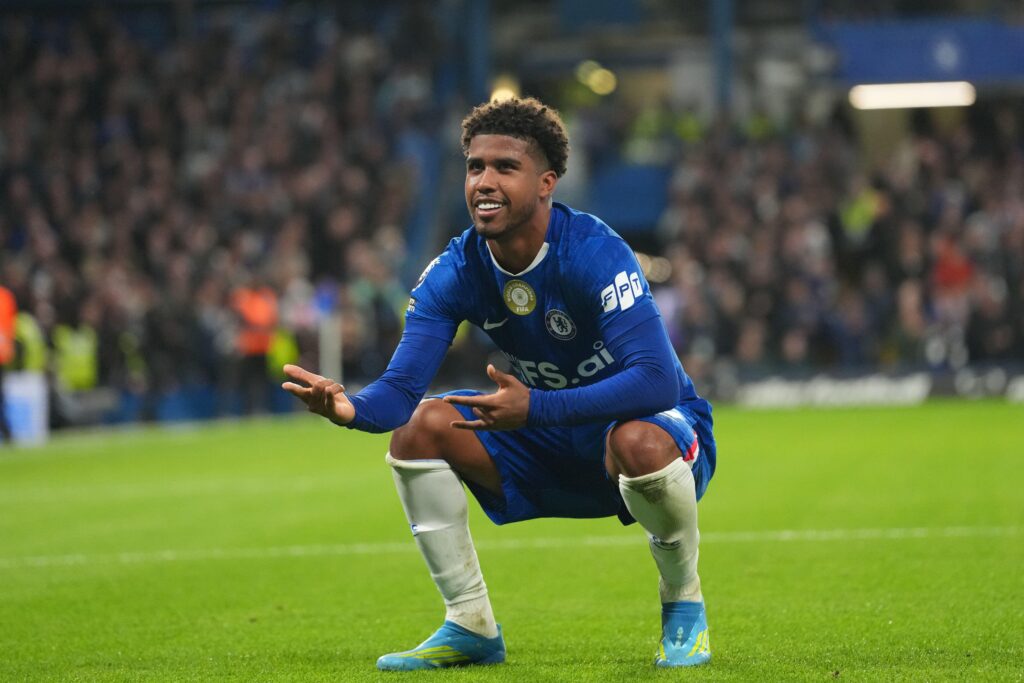
Chelsea, in turn, have offloaded former academy products Conor Gallagher, Lewis Hall and Mason Mount.
It is why Manchester United quickly offloaded Alejandro Garnacho to Chelsea and why they are prepared to sell Marcus Rashford and, at some stage, Kobbie Mainoo.
Jacob Murphy left Aston Villa for Newcastle United for an initial £39 million. Murphy had been attending the Aston Villa academy since the age of six.
Welshman Brennan Johnson switched from Nottingham Forest to Tottenham Hotspur for a reported £47 million as the top-flight continued to peddle British talent.
Premier League clubs selling homegrown talent became the norm to pacify PSR rules. It was the most effective way to generate funds as ‘pure profit’. Being ‘one of our own’ counted for something very different on the balance sheet.
Clubs prepared to overspend over three years quickly had to sell to make up the deficit or risk a points deduction. A punishment that has already affected Everton and Nottingham Forest in the Premier League and Leicester City in the Championship. Hull City could be next after an overspend of £6 million.
At the time of writing, Manchester City still await the outcome of their 115 financial charges.
SCR rules change the narrative
It is no wonder that clubs have voted to replace PSR with the new Squad Cost Ratio (SCR) financial framework.
Instead of overall club losses, the new SCR rules mean that the total squad cost cannot exceed 85% of its total football revenue if a club is not in European competition or 70% if they are.
Clubs playing in Europe must adhere to the UEFA Financial Sustainability rules, currently limited at 70%.
Income will be generated through ticket sales, merchandise, sponsorships, broadcasting rights and net profit from player sales. Outgoings include player and coaches’ wages, agent fees and transfer fees spread over the length of a contract.
The new rule capping amortisation at five years means that clubs can no longer hide those massive transfer fees behind 8-year or 9-year contracts. Something Chelsea will have to address moving forward.
With SCR rules replacing the old system, the need to sell academy graduates for ‘pure profit’ will not be as urgent.
Sadly, for Newcastle United and their desire to retain Elliot Anderson and build their future midfield around him, that particular change came too late.