
SCR Deep Dive: Why Tottenham Can Spend When Villa and Newcastle Face Restrictions
Everything you need to know about the Premier League’s new spending rules, and how some teams are benefiting more than others.
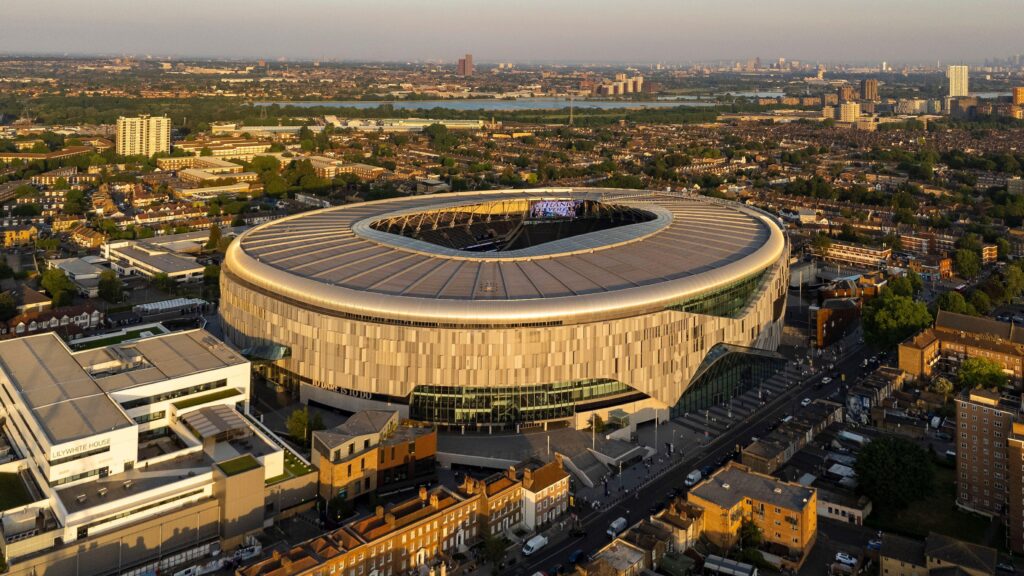
The summer transfer window has traditionally been a time of renewed optimism for Premier League fans.
No matter how poorly a team had performed the previous season, fans could hope their owner would invest heavily to turn things around.
If a team had overperformed, ambitious owners would spend big to build on their momentum.
There was always talk of which club could challenge the big boys after a summer of heavy spending.
But, in 2026, the conversation is shifting.
We’re now witnessing Newcastle and Aston Villa, two clubs with the biggest ambitions to challenge the Premier League’s ‘Big Six’, being forced to sell their star players.
Newcastle were in the Champions League last season. Villa will be there this year, having won the Europa League in 2026.
They should be in the perfect position to reinvest and cement their place as frequent challengers among Europe’s elite.
Instead, they find themselves hamstrung by the Premier League’s and UEFA’s spending rules.
Villa look destined to lose their star boy Morgan Rogers. Newcastle are seemingly open to flogging their entire first-team.
Meanwhile, Tottenham are spending crazy money despite finishing 17th for the last two seasons.
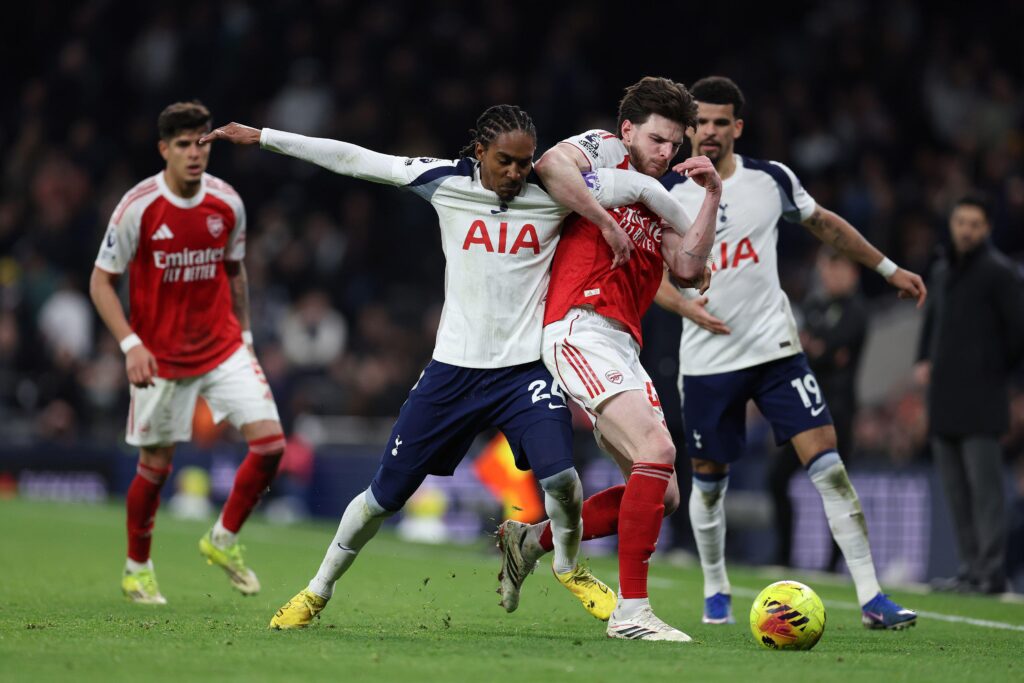
They’ve bought Jan Paul van Hecke for £52m. Tonali cost a total package worth £100m. Mateus Fernandes signed from West Ham for £85m. Andy Robertson and Marcos Senesi have arrived on free transfers. All five players will be on huge wages.
This situation has led to complaints that Premier League spending rules favour the ‘Big Six’ and make it almost impossible for other clubs to challenge.
What are the new rules that govern Premier League club spending?
From 2015/16 until a few days ago, Premier League club finances were governed by Profitability and Sustainability Rules (PSR).
These rules punished Premier League clubs that registered losses over £105m over a three-year period.
However, on 1 July 2026, PSR was replaced.
There are now two sets of financial rules in play. Squad Cost Ratio (SCR) and Sustainability and Systemic Resilience (SSR).
What is Squad Cost Ratio? (SCR)
The Squad Cost Ratio (SCR) limits a Premier League club’s annual spending on its first-team squad to 85% of its football-related revenue.
Squad costs include:
- Transfer fee amortisation*
- All payments made to playing staff
- All payments made to the head coach
- Agents’ fees
*Amortisation is the process of spreading a transfer fee over the length of a player’s contract for accounting purposes. So, if a player was bought for £50m on a five-year contract, it would count as a £10m expense each year under SCR.
Football-related revenue includes:
- Net profit from player sales
- Commercial revenue
- Matchday revenue
- Broadcasting income
- Prize money
- Revenue from non-football events staged at the club’s stadium
Essentially, the rules now only consider football-related revenues and costs. You can’t generate revenue by selling hotels or your women’s team to a parent company anymore.
What is the SCR Green Threshold and Red Threshold?
The SCR Green Threshold and Red Threshold determine punishments for overspending.
- Green Threshold: 85% of annual football-related revenue
- Red Threshold: 115% of annual football-related revenue (initially)
If a club exceeds the Green Threshold, it will face a fine based on the amount and percentage of the overspend. Its Red Threshold will also be decreased for the following season, based on the percentage of the overspend.
For example, if Leeds spent 90% (5% too much) of its annual football-related revenue, its Red Threshold will be reduced to 110% (5% less).
If a club exceeds its Red Threshold, it will face sporting sanctions.
Essentially, if you break SCR rules by a small amount, you’ll get fined. If you break the rules by a large sum or frequently, you’ll get points deducted.
Fourteen of the 20 Premier League clubs voted to introduce SCR in November 2025. That’s the minimum number needed to introduce new rules. Bournemouth, Brighton, Brentford, Crystal Palace, Fulham and Leeds all reportedly voted against it.
What is Sustainability and Systemic Resilience (SSR)?
Sustainability and Systemic Resilience (SSR) involves three tests to ensure the short, medium and long-term sustainability of a Premier League club.
- Working capital test. An assessment of a club’s immediately available cash funds.
- Liquidity test. Assessment of a club’s liquidity over two seasons.
- Positive equity test. Assessment of a club’s balance sheet to evaluate its financial health.
Clubs are assessed on 7 July each year. (Some tests take place on October 31 for newly promoted clubs).
If clubs are found to breach SSR limits, they’ll be asked to submit a business plan to the Premier League. If a club doesn’t show a reasonable plan to remedy its financial position, the league has the power to issue sanctions.
Essentially, SSR aims to ensure Premier League clubs avoid the types of financial crises that destroyed Portsmouth, Bolton Wanderers and Bury.
All 20 Premier League teams voted for SSR to be introduced.
How will these rules affect Premier League spending in practice?
Less room for calculated financial risks
Under the old PSR rules, Premier League clubs could take a risk and ‘borrow from the future’.
Imagine Bournemouth think they’re one or two players away from Champions League qualification.
They might decide to spend heavily in the summer, accept a big loss and sell players within two seasons if necessary.
That’s because PSR was calculated over three years.
However, SCR is evaluated on a season-by-season basis, giving Premier League clubs less room to take calculated gambles.
Squad costs cannot exceed 85% of football-related revenue in any season.
With that said, the fines for operating within Green and Red Thresholds are relatively paltry, so we may see some Premier League clubs choosing to dance in this danger zone.
What happens if a Premier League club exceeds its Green Threshold?
Before the start of each season, each club will agree an estimated annual revenue with the Premier League.
If a club spends more than 85% of its estimated revenue on squad costs, the Premier League will investigate the exact figures.
In the case of slight overspending, a fine is calculated based on the value and the percentage of the overspend.
Let’s say Brentford overspends by £14.7m, and that’s 10% above their Green Threshold. Their fine would be £1.47m (14.7m * 10%). Pocket change to Premier League owners.
However, their Red Threshold would also reduce by 10% for the following season, so they’d need to play by the rules eventually to avoid sporting sanctions.
Selling players will become less effective as a long-term funding strategy
Since estimated revenue is now calculated on an annual basis, Premier League clubs have less time to reinvest money from player sales back into the team.
Let’s use Newcastle’s sale of Alexander Isak as an example.
He was sold for £125m in September 2025 (the previous financial year).
That sale can therefore be used in the estimated revenue calculations for this financial year.
But it won’t count for anything revenue-wise in 2027/28.
So, if Newcastle want to reinvest while that sale still boosts their spending capacity, they’d need to do so this season.
At the same time, their board may be wary of a potential estimated revenue drop next season, unless they generate an extra £125m elsewhere.
After all, they’ll still be paying their new signings’ wages (and potentially some of the transfer fee) next year, but without that Isak money counting toward their revenue.
This scenario illustrates how player sales may become less effective as a long-term funding strategy under SCR.
Revenue matters more than ever
Under the old PSR rules, a club’s revenue mattered indirectly because it affected profitability.
Under SCR, revenue directly determines your spending limit.
The tables below illustrate how revenue is now baked directly into the spending rules.
Under the old PSR rules…
| Revenue | Maximum Losses | |
| TEAM A | £650m | £105m over three years |
| TEAM B | £400m | £105m over three years |
| TEAM C | £350m | £105m over three years |
Under the new SCR rules…
| Revenue | Maximum Squad Cost (85%) | |
| TEAM A | £650m | £552.5m |
| TEAM B | £400m | £340m |
| TEAM C | £350m | £297.5m |
Under the old rules, smaller clubs could temporarily accelerate their growth by spending aggressively, as long as they didn’t exceed the loss limit. Owners could also inject equity to support the club (within the rules), helping fund investment while revenues caught up.
Now, this is harder to do without growing a club’s revenue first.
Easier calculations for clubs in UEFA competitions
For some time, UEFA has enforced its own financial rules, based on squad costs as a percentage of revenue.
Currently, clubs competing in UEFA competitions can’t spend more than 70% of revenue on their playing squad.
Newcastle, Chelsea and Aston Villa were all fined for exceeding this limit last season.
The introduction of SCR should make it easier for Premier League clubs to calculate their spending limits for both domestic and European competitions.
That’s because SCR mirrors UEFA’s regulations, albeit with an 85% threshold.
Do these new rules favour the ‘Big Six’ more?
Both sets of rules gave the ‘Big Six’ Premier League clubs an advantage, because these clubs generate significantly more revenue than the so-called ‘Other 14’.
| Club | 2024-25 revenue* |
| 1. Liverpool | £702m |
| 2. Manchester City | £697m |
| 3. Arsenal | £690m |
| 4. Manchester United | £666m |
| 5. Tottenham | £565m |
| 6. Chelsea | £491m |
| 7. Aston Villa | £378m |
| 8. Newcastle | £335m |
*All revenue figures mentioned in this article were based on the 2024/25 season, calculated by Deloitte and converted from euros in January 2026
However, there never used to be a domestic rule explicitly stating: “You may only spend X% of your revenue on your squad each year.”
Now, there is.
This has placed a glass ceiling above any team looking to consistently challenge the established elite.
Fans of ‘Big Six’ teams might argue that’s how it should work. Clubs should spend what they earn. They shouldn’t be able to fund success with unsustainable losses. That’s exactly how Leeds nearly went out of business in the early 2000s.
Also, no-one (outside of Newcastle) wants the Premier League to become an arms race based on which billionaire throws the most money at their team.
That’s a fair argument. Perhaps these financial constraints are ‘fairer’ and ‘safer’.
But they have left fans of the ‘Other 14’ disillusioned by the challenge of breaking the ‘Big Six’ feedback loop.

Sure, it’s possible. Aston Villa and Bournemouth reached the top six last season, while Chelsea and Tottenham floundered. But these bigger Premier League clubs will always be afforded more money to bounce back.
So why can Tottenham outspend the likes of Newcastle and Aston Villa?
The answer is clearly illustrated in the table above.
Tottenham’s revenue is far higher, despite them finishing 17th for two seasons in a row.
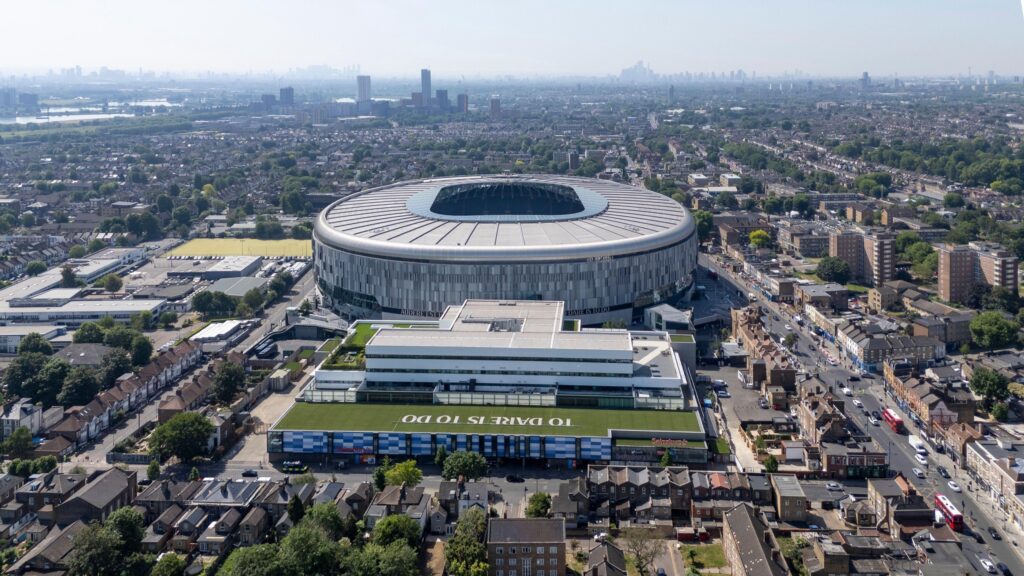
- Spurs generate hundreds of millions annually through stadium operations. This includes revenue from NFL games and concerts.
- They regularly compete in the Champions League, including last season when they qualified as Europa League winners.
- This has allowed them to attract more profitable commercial deals than their Premier League rivals.
- Crucially, Spurs hasn’t built an unsustainably expensive squad over the years. Their annual wage bill and transfer amortisation costs have remained manageable.
It’s also worth mentioning that Spurs aren’t competing in Europe this season, so they don’t have to budget for UEFA’s stricter 70% squad cost threshold.
UEFA settlement has forced Aston Villa’s hand

In their last three Premier League seasons, Villa finished 4th, 6th and 4th again. They lit up the Champions League in 2024/25 and won the Europa League last season. This year, they’ll be in the Champions League again.
So why do reports suggest they need to sell players?
It’s not just that their revenue lags almost £200m behind Tottenham’s. They’ve also been spending far too much on their first-team squad.
Although the Premier League has never punished them for disproportionate spending, Villa have been fined by UEFA for the last three seasons running.
In 2023/24, Villa agreed a settlement with UEFA to avoid larger fines by improving their financial situation. But there’s still work to do.
They were fined for breaking UEFA’s 70% squad value cap last season and the season before. Their most recent fine, issued on 30 June, was for €7.5m, plus another €15m suspended unless they incur further breaches. There’s also talk of Villa being kicked out of European competitions if they can’t balance the books.
It’s believed that offloading Morgan Rogers for £100m+ could eliminate these threats, but no-one at Villa is excited by the prospect of doing that.
The club is owned by the V Sports group, which has demonstrated ambitions to consistently compete for top honours.
Unfortunately, unlike Roman Abramovich at Chelsea and Sheikh Mansour at Manchester City, they arrived after these strict financial rules were implemented.
This has left them handicapped in their bid to catch up with the Premier League’s elite teams.
Newcastle have been hanging on by the skin of their teeth
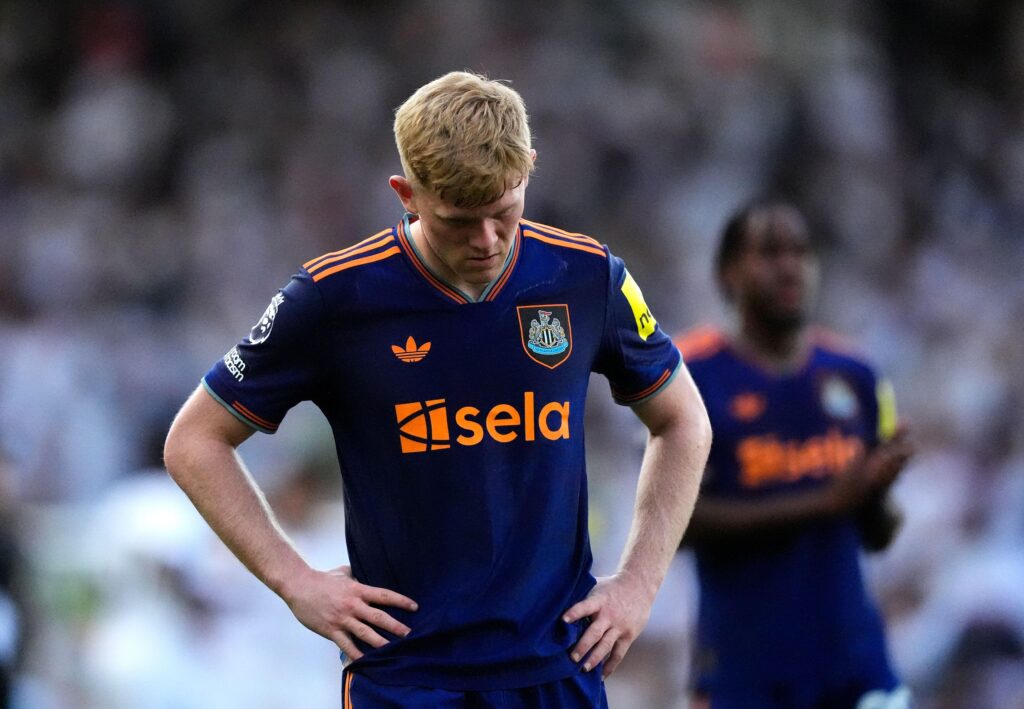
Newcastle’s £125m sale of Alexander Isak remains the highest transfer fee in English football.
It still wasn’t enough to avoid a hefty fine from UEFA last June. Having broken both UEFA’s squad cost rules and their football earnings rule (FER), they were fined €6m, plus a further €7m suspended.
And these financial issues have been plaguing them for a while.
In 2024, former sporting director Paul Mitchell admitted that the Magpies avoided PSR sanctions by the “skin of our teeth”.
They sold Elliot Anderson to Nottingham Forest for a meagre £35m that summer, presumably to make ends meet. Two years later, he’s been sold to Manchester City for £116m.
As with Aston Villa, it’s not necessarily a revenue problem — they’re the eighth-highest earners in England. It’s simply that they’ve been spending too much.
Their most expensive recruits before that “skin of our teeth” summer in 2024 were Isak (£63m), Gordon (£45m), Bruno Guimarães (£35m) and Tonali (£55m). By the time this season kicks off, all four will likely be sold, and it’s unclear how much money will be available to replace them.
Eddie Howe needs a strong start to the season after last year’s disappointing 12th-place finish, but he may have to rebuild his team on a shoestring budget.
How can ‘The Other 14’ catch up with Premier League’s elite?
It’s no longer possible to spend your way to the top without the revenue to back it up.
What’s more, under the new SCR rules, selling players may no longer be effective for long-term growth.
Premier League clubs therefore need to explore other avenues for achieving consistent revenue.
We’re already seeing clubs exploring larger sponsorships, international partnership deals and lucrative pre-season tours.
The problem is the ‘Big Six’ are doing that as well. Oftentimes, in a bigger and better way.
So, the ‘Other 14’ need to look for more long-term revenue-boosting solutions.
If it were simple to construct a brand-new state-of-the-art stadium like Tottenham, everyone would be doing it.
With that said:
- Everton moved to the Hill Dickinson stadium last year.
- Newcastle are progressing with plans for a new stadium at Leazes Park.
- Aston Villa are set to expand Villa Park’s capacity.
With this extra revenue, these clubs need to make slow and sustainable improvements to their squad.
Hopefully they can accelerate the process by qualifying for Europe and securing the extra revenue, as Villa and Newcastle have done recently.
That’s how Tottenham broke into the ‘Big Six’ originally. Their new stadium arrived after they had enjoyed a sustained period of consistent Champions League qualification
It’s not as easy, nor as exciting, as the spending sprees that launched Chelsea and Manchester City into the big time. But the slow and steady road to success is the only one that remains.
That’s a shame for the likes of Villa and Newcastle, who have ambitious owners that would happily accelerate their spending if they could.
Newcastle, Villa and Everton all voted in favour of SCR, so it can be assumed they think this new system will ultimately benefit them.
Are they destined for several seasons of mediocrity until then? Not necessarily! Remember that Villa finished fourth last season, five points above Liverpool.
On top of that, Bournemouth (revenue £199m*) finished sixth. Sunderland (revenue £40.3m*) finished seventh. Both teams qualified for the Europa League, after finishing above Chelsea (10th) and Spurs (17th).
Indeed, it was one of the more unpredictable Premier League seasons in recent memory.
The financial figures might suggest it’s harder than ever to topple the ‘Big Six’, but football isn’t played on the balance sheet.
The heroics of last season’s underdogs should be enough to inspire optimism among all Premier League fans this summer.